

Beyond the Pilot
5 Hard-Won Lessons Scaling Agentic AI in 2025
(and What They Mean for 2026)
As 2025 draws to a close, I find myself reflecting not just on the technological leaps we’ve witnessed, but on the profound shift in how enterprises are actually adopting AI.
If 2023 was the year of awe, and 2024 was the year of experimentation, 2025 was undoubtedly the year Agentic AI got real. We moved past chatbots and mere "copilots" into the era of autonomous agents capable of executing multi-step tasks.
At SimplifyX, we’ve had a front-row seat to this transformation. Sitting across the table from CIOs, CTOs, and LOB leaders at enterprises has provided us with invaluable insights. They are the pioneers pushing Agentic AI beyond the lab and into mission-critical workflows.
As we look toward 2026, it’s clear that scaling digital labor isn't just about better models—it's about infrastructure, governance, and strategy.
Here are the five critical lessons we learned from our customers in 2025, and the key takeaways for orchestrating success in 2026.
Lesson 1: Data is the "New New" Oil (Because the Old Oil Wasn't Refined Enough)
The oldest cliché in digital transformation is that "data is the new oil." In 2025, we learned that for Agentic AI, this metaphor needs an update.
Many organizations realized that while they had vast "reserves" of data, but it was still siloed. While a simple RAG (Retrieval-Augmented Generation) pilot might tolerate messy data, an autonomous agent acting on your behalf cannot.
If an agent is going to trigger a supply chain order or automatically process an insurance claim, the underlying data must be pristine, rationalized, and accessible. 2025 taught us that the success of an agent is directly proportional to the quality of the enterprise data infrastructure it sits upon.
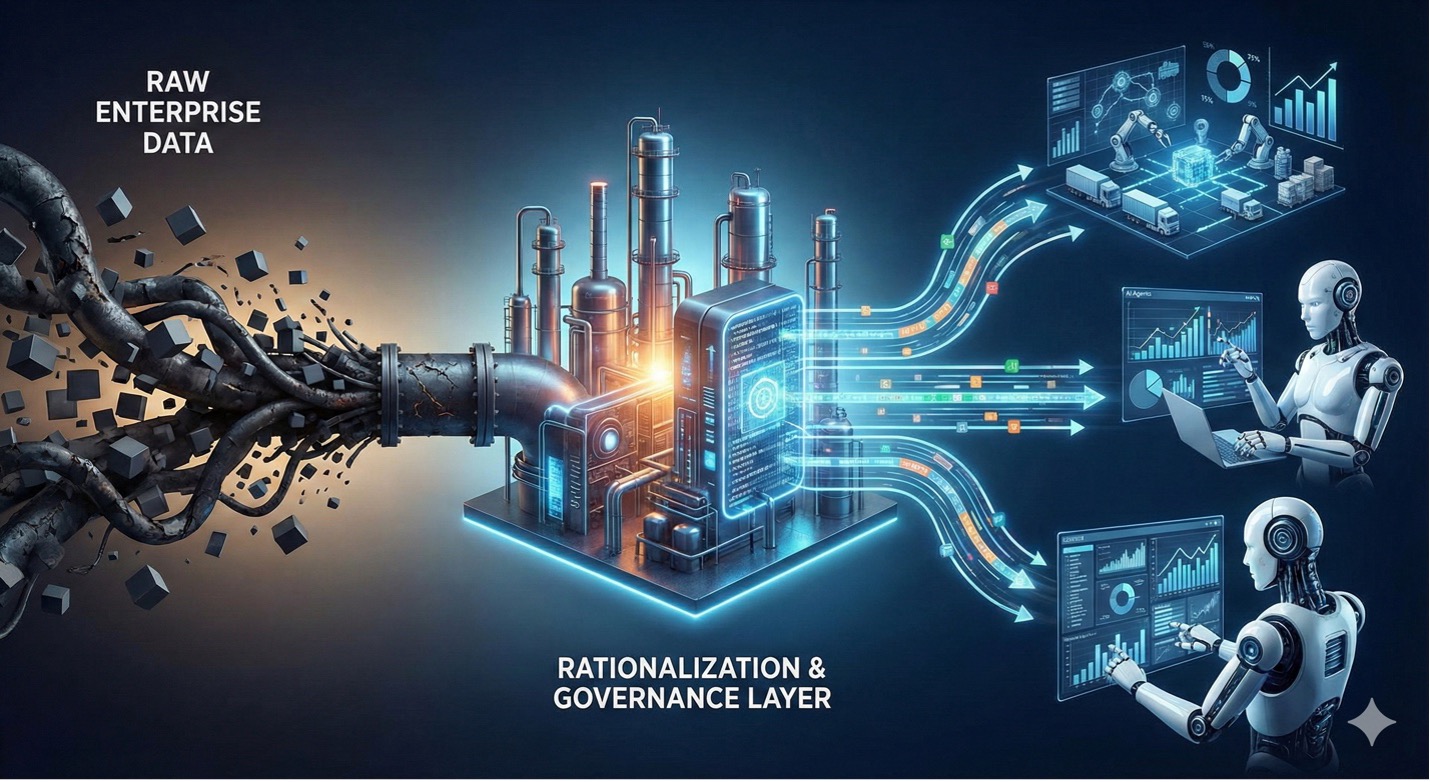
2026 Takeaway: Stop treating data prep as an afterthought. Investment in data rationalization and activation must precede large-scale Agentic AI deployment. You cannot run a Ferrari engine on dirty fuel.
Lesson 2: BYOX - Bring Your Own "Anything"
If there's one sentiment we heard repeatedly, it was a refusal to be locked in. The enterprise is a heterogeneous environment, and the AI stack is no different.
Our customers made it clear: they don't want to be tied to a single hyperscaler, a specific LLM provider, one database vendor, or a closed ecosystem of pre-built agents. They want the flexibility to swap out LLMs from OpenAI to Google, from Anthropic to Meta and so on, or to run a specialized financial model alongside a general-purpose one, all while connecting to their existing vector databases.
This demand for a "best-of-breed" approach validated our core mission at SimplifyX. The value isn't just in the components; it's in the ability to orchestrate them seamlessly.
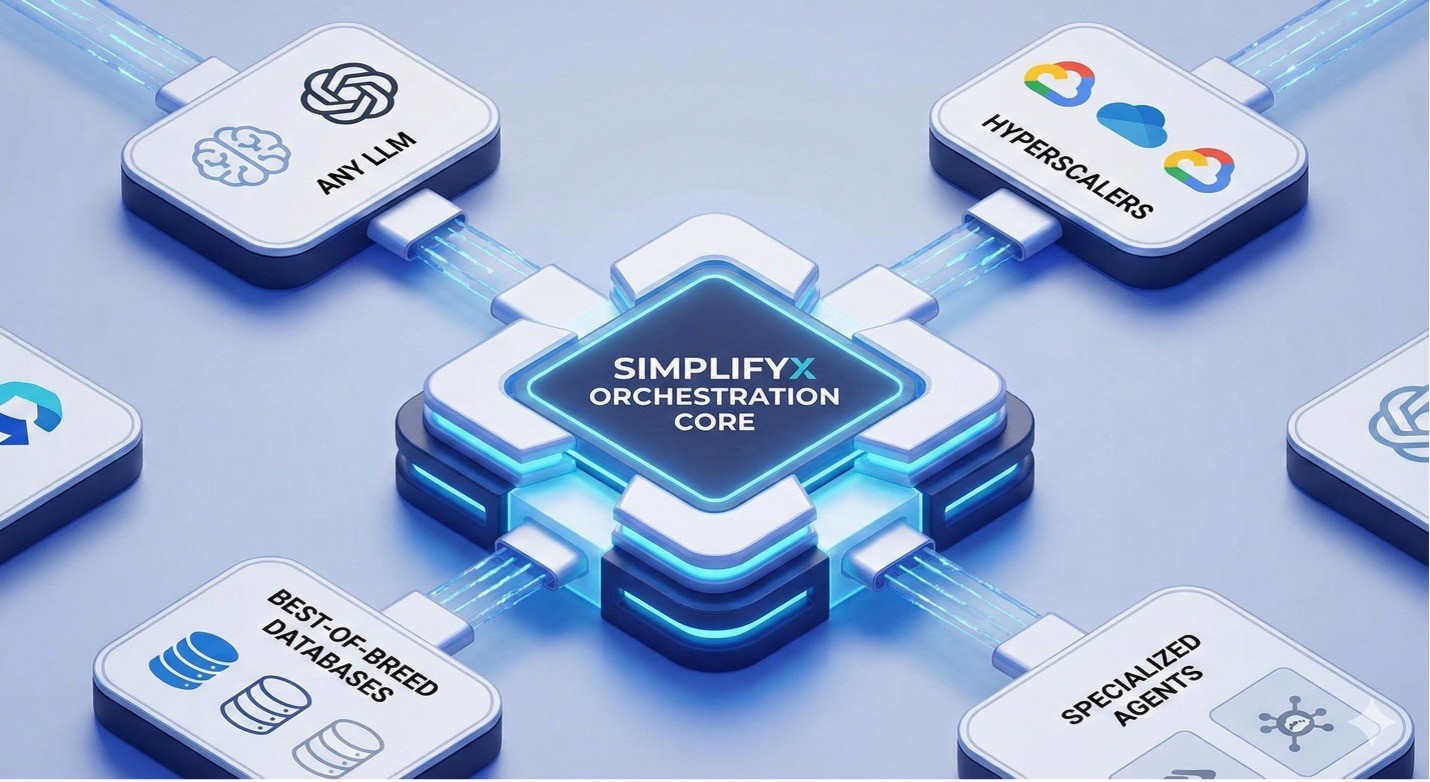
2026 Takeaway: The era of walled gardens is over before it began. Your AI strategy must be modular. Invest in orchestration platforms that allow you to mix, match, and govern diverse technologies as a cohesive system.
Lesson 3: AI Security is No Longer Just a "Concern"—It’s an Imperative
The fear of "runaway AI"—agents taking unauthorized actions or leaking sensitive data—became a boardroom issue in 2025. The initial reaction for some was to pump the brakes.
However, the leaders didn't stop; they got smarter about control. We learned that security isn't about preventing AI from acting; it's about rigorous, continuous validation of how it acts.
This shifted the focus to two critical areas:
Pre-deployment Evals: Testing agents against thousands of adversarial scenarios before they ever touch production data.
Real-time Observability: Having a "control tower" view of every agent action, with the ability to intervene instantly if a guardrail is breached.
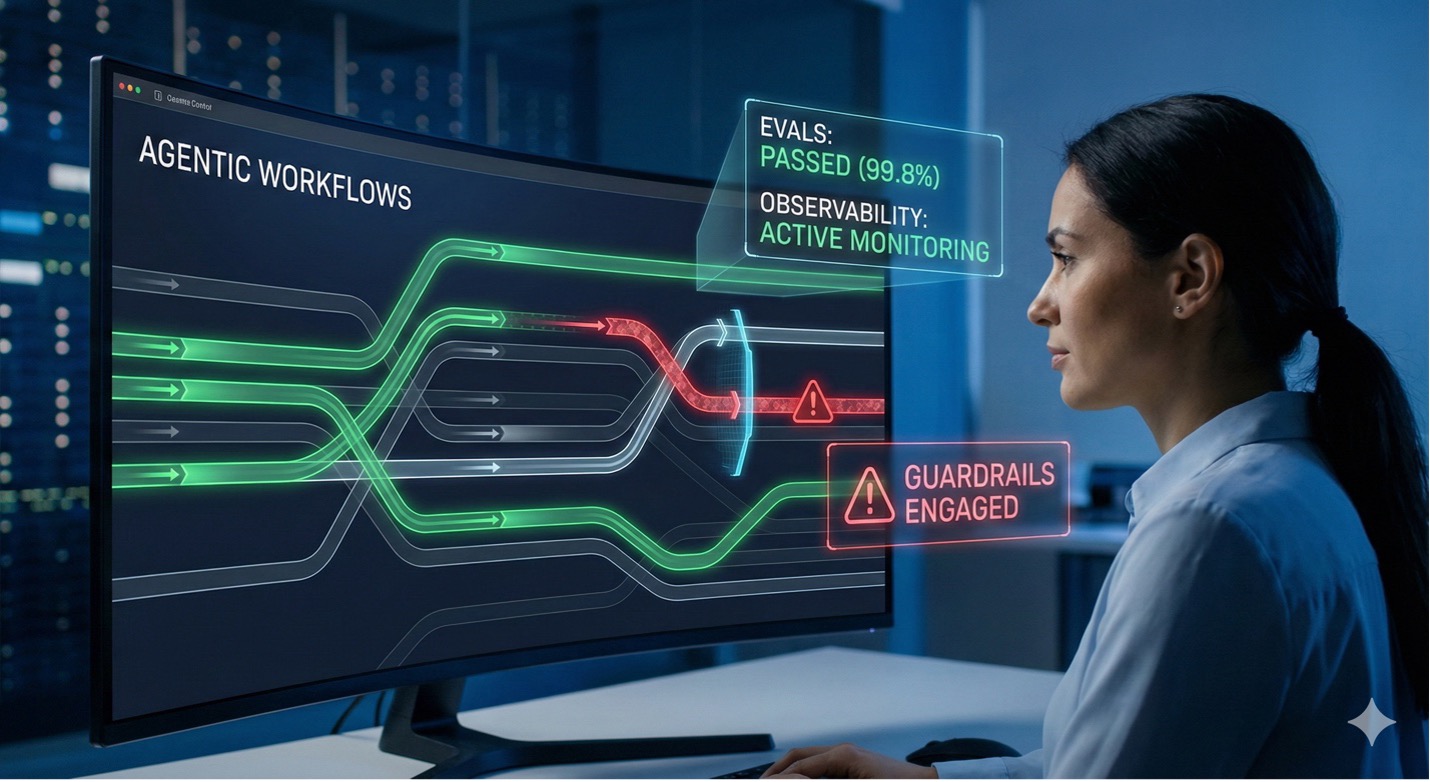
2026 Takeaway: Security cannot be bolted on at the end. Evals and observability must be integrated into the very fabric of your orchestration platform. Trust is the currency of Agentic AI, and it must be earned through verifiable control.
Lesson 4: Business Outcomes and Value Still Matter (Faster presentations and quick spreadsheets are Not Enough)
A faster way to create a PowerPoint deck is nice. But in 2025, we saw the novelty of "general office productivity" AI wear thin. Enterprises started demanding real ROI—the kind that shows up on the P&L.
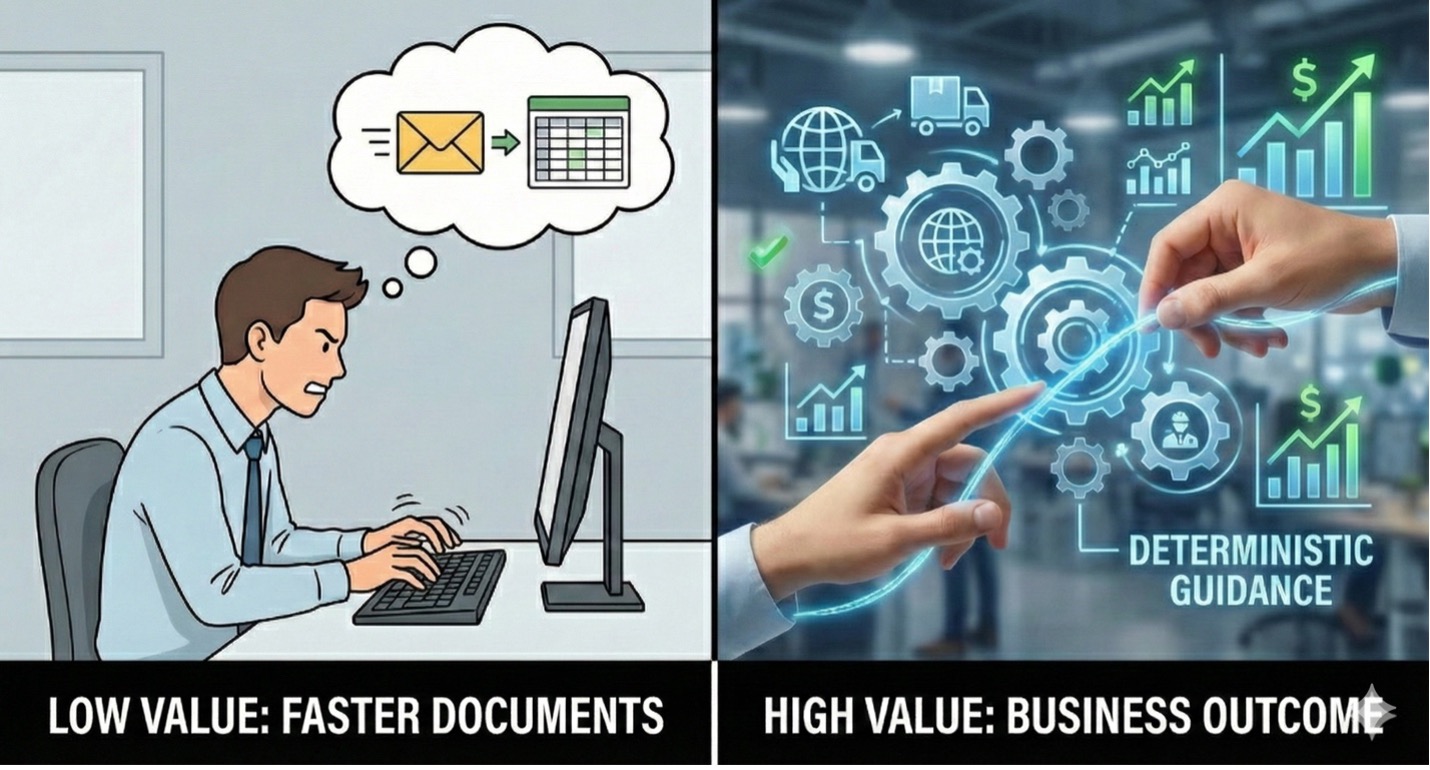
The most successful deployments weren't general-purpose assistants; they were deeply embedded into specific, high-value workflows. Think automated claims adjudication in insurance, autonomous procurement in manufacturing, or proactive customer churn prevention in SaaS.
Crucially, we learned that this value is unlocked not by letting AI "run amok," but by "nursing" it deterministically. The best results came when humans defined the rigorous steps of a workflow and used agents to execute them with precision, rather than hoping an LLM would magically figure out a complex business process on its own.
2026 Takeaway: Move beyond the "copilot for everyone" mentality. Identify three to five high-friction, high-cost business processes and deploy highly specialized, deterministically guided agents to transform them.
Lesson 5: Is the Future of Work Finally Here? (Yes, But It's a Process Redefinition)
For years we’ve talked about the "future of work." In 2025, Agentic AI started to actually deliver it. But it didn't look like mass displacement; it looked like radical process re-engineering.
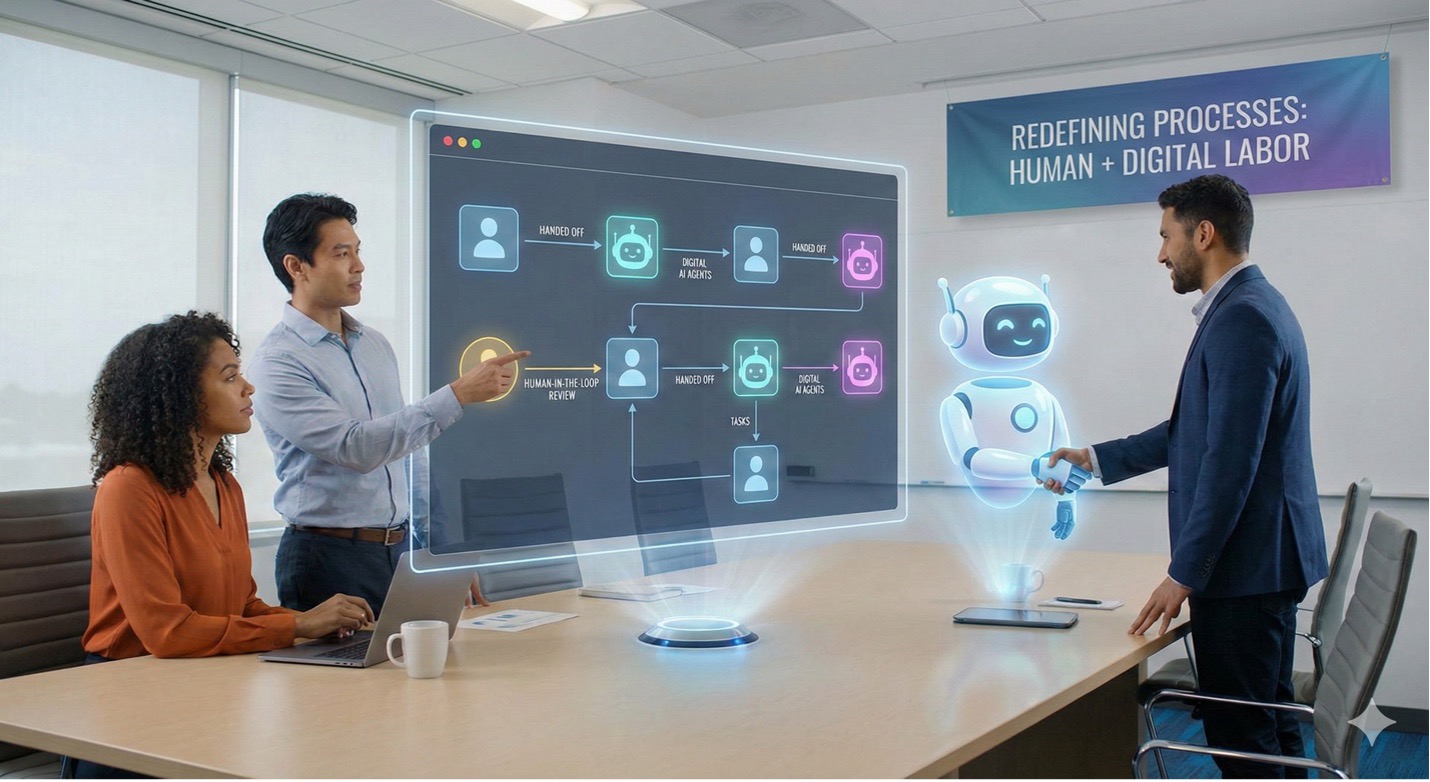
As "digital labor" (agents) began taking on end-to-end tasks, organizations had to fundamentally rethink how work gets done. The challenge wasn't the technology; it was the organizational change management.
We learned that the critical success factor is defining the "human-in-the-loop" cadence. Where does the agent hand off to a human? When is human approval required? How do human teams manage a workforce that is 50% digital?
2026 Takeaway: Stop layering AI on top of old processes. 2026 is the year to tear down legacy workflows and rebuild them from the ground up, designing for a hybrid workforce of humans and agents working in concert.
Conclusion: The Year of Orchestration
If 2025 taught us anything, it’s that the individual components of AI are becoming commodities. The models will get faster, the databases will get larger, and the clouds will get cheaper.
The competitive advantage in 2026 won't come from having the "best" AI model. It will come from having the best ability to orchestrate those models, your data, your security, and your people into a coherent, value-generating system.
At SimplifyX, we are energized by the challenges ahead and committed to providing the platform that makes this orchestration possible. Here’s to building the future, together. Happy New Year.

Vinay Nadig serves as the CEO of SimplifyX. He is relentlessly focused on enabling his customers to solve hard problems using Agentic AI. He brings decades of leading teams in architecting, building and implementing real solutions to achieve real business outcomes.
